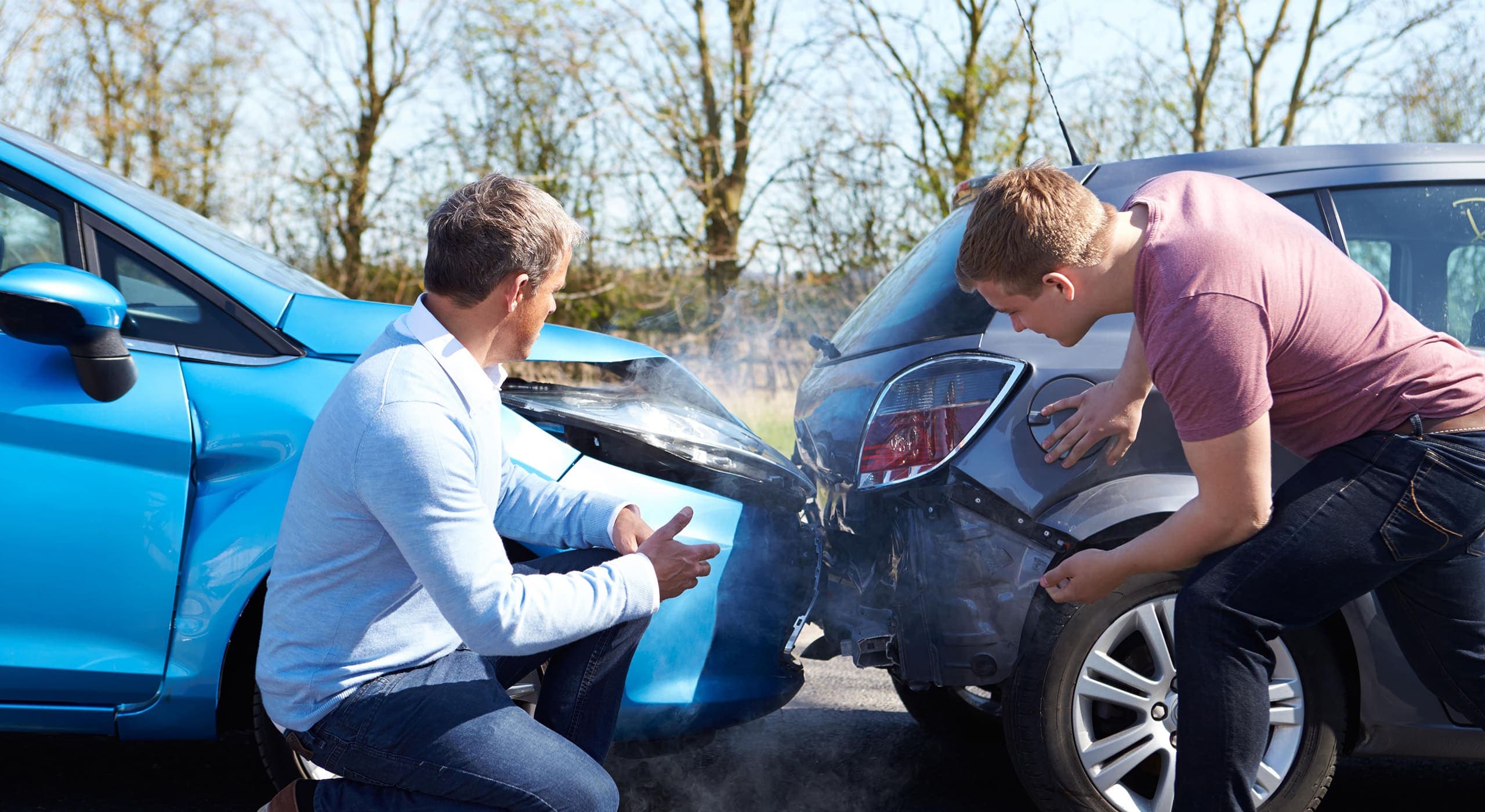
Crash for cash scams are run by fraudsters who stage accidents, sometimes with innocent road users, to profit from fraudulent insurance claims.
Criminals can orchestrate accidents using various tactics, such as disabling brake lights to prompt rear-end collisions, abruptly slamming on the brakes without warning, flashing their lights at junctions to falsely signal you to proceed before deliberately crashing into you, or coordinating with other drivers to stage collisions.
What should I do if I think I have been targeted?
Look out for warning signs
Are cars in front of you travelling unusually slowly or do they speed up and slow down for no good reason? Is a driver paying particular attention to the vehicle behind them?
Stay safe
Always maintain a safe distance between you and vehicles in front of you. Always ensure that you can brake in time.
Stay alert
Is the other driver way too calm for someone who has just been involved in a car accident? Have they already written down their insurance details? Are their injuries completely at odds with the force of the impact?
Gather information
Take notes of all relevant information, including the driver, passengers and any other circumstances. Take photos of the scene if you can - and if it is safe to do so.
Report
Call the police to report your suspicions and tell the IFB’s Cheatline on 0800 422 042
FAQs
How can I tell if I have been a victim of a crash for cash scam?
There are three types of crash for cash accidents:
- Staged accident: fraudsters crash their own vehicles together or mimic damage from a genuine crash
- Induced accident: the fraudsters target an innocent motorist to become the ‘at fault driver’, for example by deliberately slamming on the brakes of their car to ensure the car behind crashed into them
- Fabricated accident: fraudsters submit completely fabricated claims for accidents which never actually took place
Who are the victims?
Crash for cash fraudsters often target vulnerable drivers, who are under time pressure or do not want to cause any trouble. Ultimately, fraudsters harm all law-abiding motorists. Beyond the obvious safety implications, they cause unnecessary work for emergency services and the NHS, and innocent victims of induced accidents can lose their no-claims bonus and may see their premiums rise following an ‘accident.’